Your Guide to Sourcing Chinese Auto Parts: Answers to Top FAQs
2025-12-01
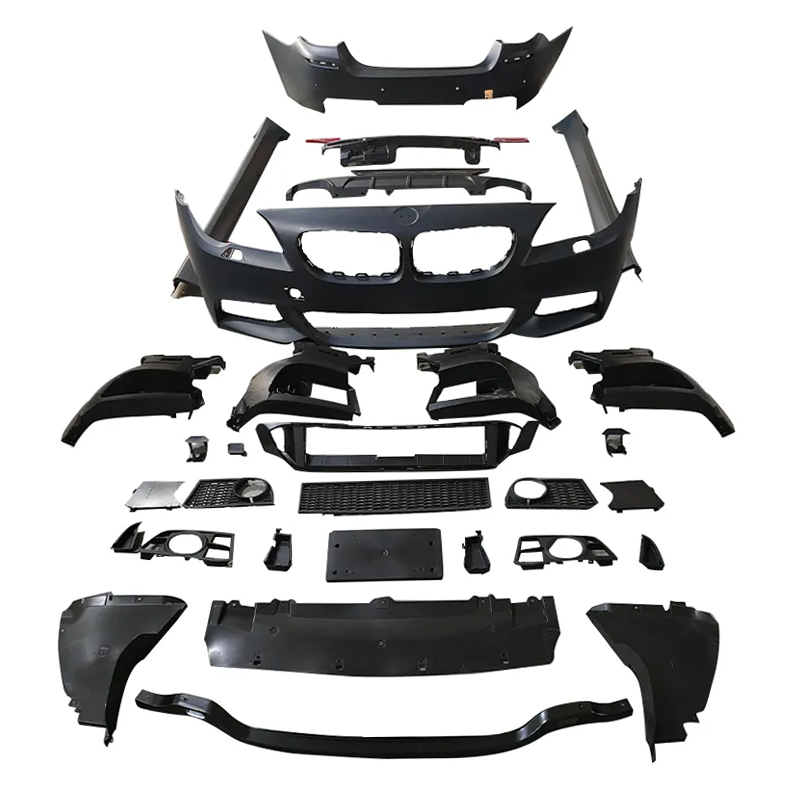
Sourcing auto parts from China has become a game-changer for global buyers, thanks to its cost-effectiveness, complete product range, and adaptability to diverse market needs. However, questions about quality, compliance, logistics, and transactions often arise. We’ve compiled the most common FAQs to help you navigate the process smoothly and confidently.
Q1: How to ensure the parts match my target vehicle models?
Mismatched parts are a top concern for overseas buyers. The solution lies in precision matching based on professional data: Provide key information such as VIN code, engine model, or vehicle year/make/model (e.g., "Toyota Camry 2024" or "Weichai WP series engine"), and reputable suppliers will use digital matching systems to confirm compatibility within seconds . For customized or niche parts, request 1-2 samples for testing before bulk orders to eliminate "picture vs. reality" discrepancies . Most reliable suppliers cover over 95% of mainstream models, from passenger car brake pads to heavy-duty truck transmissions .
Q2: What quality and certification guarantees are there?
Quality assurance starts with supplier screening. Look for manufacturers with ISO/TS16949 certification, OEM experience for international brands, or third-party test reports (e.g., SGS, CE) . For specific markets:
• European buyers need E-mark certification (e.g., ECE R47 for lighting) and compliance with REACH regulations .
• US buyers require DOT certification for core components (e.g., FMVSS 135 for brake systems) and EPA certification for emission-related parts .
Reputable suppliers offer product traceability and warranties—most provide 3-12 months of after-sales support, with free returns or replacements for quality issues .
Reputable suppliers offer product traceability and warranties—most provide 3-12 months of after-sales support, with free returns or replacements for quality issues .
Q3: How to handle language barriers and order communication?
Language gaps often lead to costly mistakes (e.g., misinterpreting model years or delivery terms). Opt for suppliers with multi-language support (English, Spanish, Arabic, etc.) and professional auto parts glossary translation tools to avoid miscommunication . Many also assign dedicated account managers to oversee order details, production progress, and problem-solving—turning 3-day communication cycles into 1-hour confirmations with near-zero error rates .
Q4: What logistics options are available, and how long does delivery take?
Logistics flexibility depends on your needs:
• Bulk orders: Sea freight is cost-effective, with delivery to US/EU ports in 15-30 days .
• Emergency parts: Air freight delivers in 3-5 days for urgent repairs .
• Regular items: 80% of common parts (filters, spark plugs) are in stock, enabling same-day order processing and next-day shipment .
Professional suppliers handle customs clearance documents in advance (e.g., HS code verification, origin certificates) to avoid port detention and extra fees . Local warehousing in key markets (e.g., Germany, Mexico) can shorten delivery to 2-3 days .
Professional suppliers handle customs clearance documents in advance (e.g., HS code verification, origin certificates) to avoid port detention and extra fees . Local warehousing in key markets (e.g., Germany, Mexico) can shorten delivery to 2-3 days .
Q5: What are the secure and cost-effective payment methods?
Cross-border payment pain points (high fees, slow transfers, exchange rate losses) are solvable:
• Use local payment accounts in 18+ core markets (US, EU, Southeast Asia) for fee-free, 10-minute transfers .
• Choose phased payment (30% deposit, 50% after shipment, 20% post-acceptance) with third-party supervision to protect funds .
• Avoid exchange rate risks by settling in local currencies (USD, EUR, SGD) with real-time official rates .
Q6: How to navigate tariffs and trade agreements?
Maximize cost savings with policy insights:
• USMCA: Parts with ≥60% regional value content qualify for zero tariffs to the US .
• RCEP: Enjoy preferential tariffs for shipments to Southeast Asia by providing origin certificates .
• Consult suppliers or import agencies to optimize HS codes and origin declarations, reducing tariff costs by 15-25% .
Sourcing Chinese auto parts doesn’t have to be a gamble. By partnering with reliable suppliers who prioritize transparency, compliance, and customer support, you can access high-quality parts at competitive prices while minimizing risks. Whether you’re a repair shop, fleet manager, or distributor, these answers will help you make informed decisions and unlock the full potential of China’s auto parts supply chain.
Choose Srumdy — We Have Infotainment Systems for Every Post-2010 Porsche Model
Srumsy LED Tail Light Modification for Porsche 911: Redefine Rear Styling with Race-Inspired Flair
Related Article
Light Reinvents Classic: Srumdy Matrix LED Headlights for Porsche Panamera 970.1
Light Reinvents Classic: Srumdy Matrix LED Headlights for Porsche Panamera 970.1